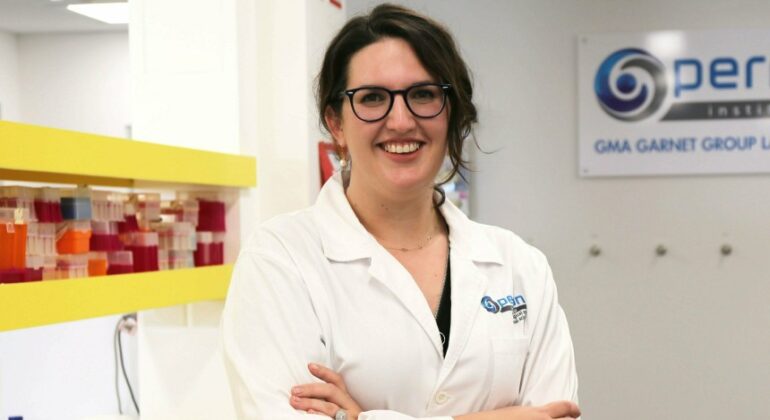
Spotlight on Postdoctoral Scientist & Eyewall Researcher Dr Belinda Kaskow

Spotlight on Postdoctoral Scientist & Eyewall Researcher Dr Belinda Kaskow

After completing a Bachelor of Science at UWA majoring in Genetics, Dr Kaskow concentrated her efforts on immune disease research, specifically multiple sclerosis and cancer. 

“My main focus is defining the antigens responsible for MS and delineating immune dysregulation in patients diagnosed with clinically isolated syndrome, the earliest time point to study MS. 

“I undertook my Honours and subsequently my PhD in Winthrop Professor Lawrie Abraham’s lab at UWA and fell in love with science and research. My main goal is to discover treatments which provide positive impact for people living with MS. 

“During my postdoc experience overseas, several members of my immediate family were diagnosed with different types of cancer. The unknown is most difficult. Finding answers and potential treatments keeps me motivated in a competitive environment.” 

Dr Kaskow completed postdoctoral fellowships at Harvard Medical School, Brigham and Women’s Hospital in the Ann Romney Center for Neurologic Diseases in Boston, USA.  

“My postdoctoral mentor, Associate Professor Clare Baecher-Allan at Brigham and Women’s Hospital was incredibly inspiring. She has an infectious passion for research and taught me how to create opportunities even if experiments failed. 

“‘Control the controllable’ is one of my favourite sayings. Regardless of the outcome, I know I’ve done my best. 

“Last year, I received the inaugural Eyewall Foundation Post-Doctoral Fellowship. This allowed me to return to my hometown of Perth and work at the Perron Institute in Professor Allan Kermode’s lab.

“Working with Professor Kermode is a privilege. He has incredible compassion for his patients and brings his clinical expertise to his research program so that, as a team, we can find solutions to some of the complex problems in neurological research.

“My advice for students and young researchers is that as there are many avenues in science, find a good mentor and team environment for you to thrive.” 

In her spare time, Dr Kaskow enjoys cooking and baking. “I am challenging myself to make every recipe out of a Women’s Weekly ‘Sweet old-fashioned favourites’ cookbook, often used in my childhood. 

“I also have two young boys who love to play ‘scientist’ which for them means anything involving mixing food colouring and getting messy.” 


Our medical research

The research we’re funding is undertaken in Western Australia and by a global network of medical practitioners. Take a look.
What we’re trying to achieve.

We’re a young foundation with big dreams. Our funding is aimed at a number of critical areas of vmedical research.

Meet the researchers.

The research we’re funding is undertaken in Western Australia and by a global network of medical practitioners. Take a look.

Read More

$900,000 Funding Boost for Eyewall Researchers

$900,000 Funding Boost for Eyewall Researchers

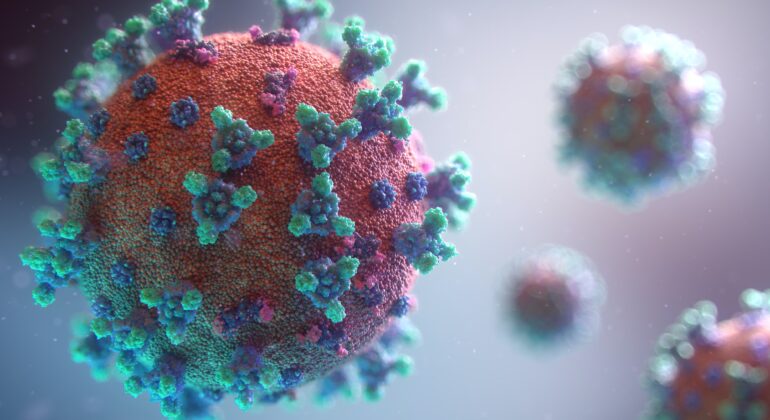
Attracting a grant of $900,000 from the US-based National Multiple Sclerosis Society, Eyewall Researchers Professor Allan Kermode and Dr Belinda Kaskow are among the Western Australian-led research team entrusted to further understand an apparent link between the Epstein Barr Virus and multiple sclerosis (MS). 

Despite an enormous worldwide research effort, what causes MS is unknown, but it is thought infection with the Epstein Barr Virus increases the risk of developing this neurodegenerative disease later in life. 

Epstein-Barr Virus, which spreads through saliva, causes infectious mononucleosis – often called the kissing disease. 

“The very welcome funding from the National Multiple Sclerosis Society will be used to explore the connection between MS and Epstein Barr Virus,” said Clinical Professor Allan Kermode who is the Chief Investigator and leads the Demyelinating Diseases Research group at WA’s Perron Institute and Centre for Molecular Medicine and Innovative Therapeutics (CMMIT) at Murdoch University. 

“The blood brain barrier protects the central nervous system from lymphocytes, white blood cells that determine specific immune responses to infectious microorganisms and other foreign substances,” Professor Kermode said.

“In MS, lymphocytes enter the central nervous system, and it is thought they attack self-antigens (cellular proteins) in the brain, mistaking them for the Epstein Barr Virus.

“In this project, we will look at the lymphocytes present in the damaged areas of the brain from donated post-mortem samples of an individual with MS.

“The aim will be to determine whether the antigens the lymphocytes are targeting are a self-antigens or foreign intruders. 

“We will then screen individuals recently diagnosed with MS to determine whether we can see these lymphocytes in the blood before they go into the central nervous system. 

“New technological advancements are allowing us to work towards identifying the cause or causes of MS and the information we discover will help us develop new, more effective treatments,” Professor Kermode said.

The project is a national and international collaboration between the Perron Institute, Harry Perkins Institute, The University of Western Australia, Murdoch University, University of Sydney, Vanderbilt University Medical Centre in the USA and Perth-based biotech company Biotome.

Perron Institute Chief Investigators are Dr Belinda Kaskow (CIB), Postdoctoral Scientist at Perron Institute and CMMIT, and Dr Xiaonan Zhong (CIE), PhD Student (UWA/Perron Institute), and Associate Investigator Dr Marzena Fabis-Pedrini, Senior Research Fellow and MS Research Coordinator at the Perron Institute and CMMIT.

Article source and credit: Perron Institute

Our medical research

The research we’re funding is undertaken in Western Australia and by a global network of medical practitioners. Take a look.
What we’re trying to achieve.

We’re a young foundation with big dreams. Our funding is aimed at a number of critical areas of vmedical research.

Meet the researchers.

The research we’re funding is undertaken in Western Australia and by a global network of medical practitioners. Take a look.

Add Your Heading Text Here

Investigating a potential link between multiple sclerosis and Epstein Barr

Read More

Dr Belinda Kaskow announced as latest MS Australia grant recipient

Dr Belinda Kaskow announced as 
MS Australia grant recipient

MS Australia recently announced its new round of incubator grants for ‘out-of-the-box’ Australian research projects that will explore innovative ways to prevent and treat multiple sclerosis (MS), including new research that will further explore the prevalence and incidence of MS in different parts of Australia. 

This latest round of funding for the new MS research projects will see $180,000, distributed across four research projects and a postgraduate scholarship for an outstanding young researcher in the field of MS. 

MS Australia’s Head of Research Dr Julia Morahan says the grants are both an investment into the research and in the researchers. 

“They allow new and important questions to be asked that will lead us closer to the answers we need to ensure multiple sclerosis is where it needs to be – behind us. 

“In this our 50th Year, our mission is to supercharge MS research and advocate with vigour, to achieve our ultimate goal, a world without MS,” Dr Morahan said. 

Dr Kaskow who is the inaugural Eyewall Foundation Post-Doctoral Fellowship recipient currently works at Murdoch’s Centre for Molecular Medicine and Innovative Therapeutics and the Perron Institute, investigating specific components of the immune system that may be involved in early signs of MS. 

She said this will help identify how early this immune imbalance occurs and give critical insight into how the disease begins. 

“Understanding immune system dysfunction at the earliest clinical time point to study MS allows us to better understand the disease course so that we can develop therapies to halt disease progression,” Dr Kaskow said. 

MS is the most common acquired chronic neurological disease affecting young adults, often diagnosed between the ages of 20 to 40 and, in Australia, affects three times more women than men.

As yet, there is no cure. There is no known single cause of MS, but many genetic and environmental factors have been shown to contribute to its development.   

Incubator grants support novel ideas, and the subsequent generation of preliminary data that may enable researchers to apply for larger grants in the future. 

For more information about the researchers funded visit the MS Australia website.

Photo source and credit: Perron Institute

Our medical research

The research we’re funding is undertaken in Western Australia and by a global network of medical practitioners. Take a look.

What we’re trying to achieve.

We’re a young foundation with big dreams. Our funding is aimed at a number of critical areas of vmedical research.

Meet the researchers.

The research we’re funding is undertaken in Western Australia and by a global network of medical practitioners. Take a look.

Read More

Eyewall Foundation Board Director and Master’s Teammate’s ‘Lifesaver’ Effort

Eyewall Foundation Board Director and 
Masters Teammate's 'Lifesaver' Effort

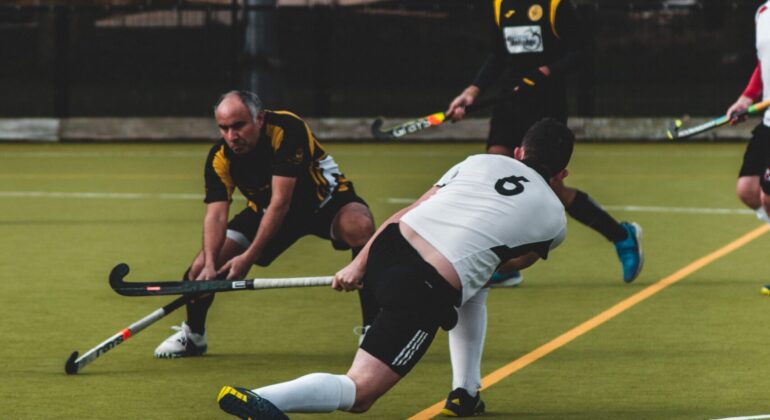
A pair of WA Masters hockey players sprung into action recently and were able to save the life of their teammate and captain recently when he collapsed without any vital signs at the recent Hockey Australia Men’s Masters Championships.

Western Australia’s 60s division two captain David Tonkin was walking back onto the field after the halftime break of his side’s match against Queensland at the Championships on the Gold Coast when he fell to the floor and showed no signs of life.

Fortunately for Tonkin, his teammates Dr David Mountain and Professor Michael Henderson were well-versed in emergency situations and knew exactly what to do.

Board Director of Eyewall Foundation, Professor Henderson is also the founder of the global acute trauma business Emergency Triage Services, while Associate Professor Dr Mountain is its CMO and a fellow of the Australian College of Emergency Medicine (FACEM).

The pair sprung into action to save Tonkin’s life, with Mountain giving cardiac compressions and Henderson giving mouth-to-mouth on the pitch on the Gold Coast to save their teammate’s life.

“Just as we were breaking out to walk back onto the field for the second half of the game he keeled over,” Professor Henderson said.

“Dave dived in and started doing a cardiac massage, but earlier in the day he had been hit in the face and lip which I realised would make it hard for him to do mouth-to-mouth, so I jumped in and started thisat.

“Within half an hour he was on his way to a major hospital – which was five minutes away from the turfs.

“The result was an amazing result given we had our captain back.”

Tonkin is now recovering from Bypass Surgery in athe Brisbane Gold Coast Hospital and Professor Henderson said he was in “fantastic spirits”.

Professor Henderson said credit for the life-saving mission should not go solely to himself as it was a joint outcome.

“I take the credit for the Royal Life Saving Society and St John Ambulance who run these programs and refreshers for CPR,” Professor Henderson said.

“If it had not been for these amazing not-for-profit organisations, I would have been floating around.

“Dave wouldn’t have been with his expert trauma background, but it was certainly handy to have another person able to assist under the circumstances.”

Professor Henderson is a former Hockey WA president and was appointed in August as the inaugural Chair of the global World Masters Hockey Medical Advisory Committee for a four-year term.

His company Emergency Triage Services have been a prominent sponsor of Hockey WA.

He said the dramatic rescue on the Gold Coast stressed the importance for all Masters hockey players to focus on preventative maintenance and effective medical screening.

“Hockey is quite a unique game that is played into much later years than many other sports,” Professor Henderson said.

“The big issue for us here is as as many of us start to age, we still have the skills, but don’t acknowledge we deteriorate physically.

“We need to make sure we protect all our players so we don’t have situations like this in the future.

“It is important to start thinking about preventative maintenance now.”

Professor Henderson urged all Masters players to have regular health check-ups, lift their body weight as well as aerobic exercises and to train themselves and their families in first aid.

“It is really important to make sure you have a full physical each year, including regular stress electrocardiography ECG’s,” he said.

“I think the more of us that get into a gym in our later years, the less likely we are to have injuries.

“To be able to do the refresher courses with Royal Life Saving Society and St John Ambulance is critical for every family.”

Henderson is a Professorial Fellow, the University of Western Australia, Faculty of Medicine, Dentistry & Health Sciences.

Article originally published via HockeyWA.

Our medical research

The research we’re funding is undertaken in Western Australia and by a global network of medical practitioners. Take a look.

What we’re trying to achieve.

We’re a young foundation with big dreams. Our funding is aimed at a number of critical areas of vmedical research.

Meet the researchers.

The research we’re funding is undertaken in Western Australia and by a global network of medical practitioners. Take a look.

Read More

Eyewall Foundation Donates $300,000 Towards Neurological Research At The Perron Institute.

Eyewall Foundation Donates $300,000 Towards Neurological Research At The Perron Institute.

At the Eyewall Foundation, research lies at the core of everything we do.

Each year we aim to bring together the most respected researchers and clinicians to solve the riddle of incurable neurological disease in the hopes to help individuals and their loved ones everywhere.

Leaders in neuroscience for 40 years and home to WA’s most successful research breakthrough teams, the Perron Institute have made brains their business so people with neurological conditions around the world can lead a better quality of life. To date this year, the Eyewall Foundation have donated $300,000 towards neurological research at the Perron Institute, with provided funds helping to finance two medical research positions.

This collaborative partnership between the Eyewall Foundation and Perron Institute will facilitate the pursuit of improved treatments, prevention, and cures, with the award providing the opportunity for life-changing, catalytic funding to the world’s top researchers.

Dr Belinda Kaskow, a recently funded scientist who is passionate to see diseases such as multiple sclerosis and cancer eradicated from society will benefit directly from our latest donation, with Belinda being a recipient of the inaugural Eyewall Foundation Postdoctoral Award.

Belinda was also recently featured and shared her story with Eyewall which is available online now.

Add a heading

None of this would be possible without your support and we have big plans to take our funding efforts to new heights.

If you do not already support our vital work with a regular donation, please consider supporting us in this way as well as fundraising. 

Regular giving is so important for helping us to plan and sustain our vital work – you can support our cause here.

Our medical research

The research we’re funding is undertaken in Western Australia and by a global network of medical practitioners. Take a look.
What we’re trying to achieve.

We’re a young foundation with big dreams. Our funding is aimed at a number of critical areas of vmedical research.

Meet the researchers.

The research we’re funding is undertaken in Western Australia and by a global network of medical practitioners. Take a look.

Read More

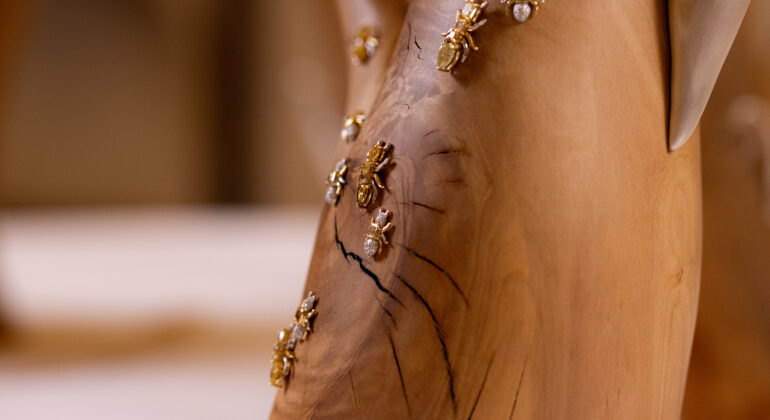
The Power of Ants

The Power of Ants

If you’ve watched an ant colony go to work, you’ve seen the strength and teamwork required to get the task done on a daily basis. Constantly on the go, ants are always searching for the next big assignment to support their community.

One ant cannot achieve much on his own but a colony of ants holds exponential powers to build sand dunes, lift objects over 5000 times their own weight and move more than 50 tonnes of dirt every year.

At Eyewall, we also believe in the collective power that exists from human connections.

Transformations are attained through painstaking and tiresome work. Like our researcher’s efforts, progress can often seem frustratingly slow, but it is only through research that new treatments will become available.

By focusing on collaboration to achieve success, every person plays an integral part of the puzzle we are trying to solve. Simply by working together can we unlock the secrets of brain disease and help find cures to give people hope for the future.

When you donate to the Eyewall Foundation, you’re joining us in securing a future where neurological disease is a thing of the past. Click here to make a donation today.

Our medical research

The research we’re funding is undertaken in Western Australia and by a global network of medical practitioners. Take a look.

What we’re trying to achieve.

We’re a young foundation with big dreams. Our funding is aimed at a number of critical areas of vmedical research.

Meet the researchers.

The research we’re funding is undertaken in Western Australia and by a global network of medical practitioners. Take a look.
Read More

Bo·Be & Rapaport

Bo·Be & Rapaport

Eyewall’s jewellery brand Bo·Be is supported
by the world-renowned Rapaport Group.

Established in 1976, the Rapaport Group is an international network of companies supporting the development of fair, transparent, efficient, and competitive diamond and jewelry markets.

Rapaport shares Eyewall’s ambition to use business to create a better world, not just make money. They support socially-conscious, ethical jewellery trading and are leading lights in the promotion of human rights throughout the global industry.

With over 20,000 clients in 118 countries the Rapaport Group is an innovative force for positive change. Their information and trading services have revolutionized the diamond industry by creating unprecedented pricing and availability transparency across global markets.

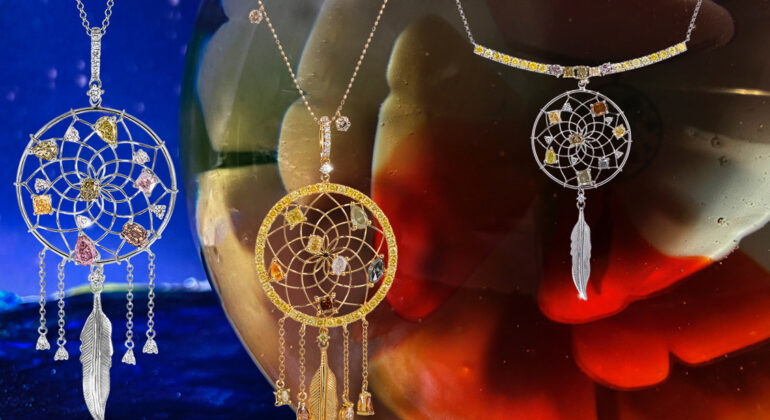
Recently, the legendary Rapaport Magazine has featured Eyewall and its fund-raising jewellery brand Bo·Be. Several of our pieces have been featured on their website as their Jewel Of The Week (including our beloved Dreamcatcher, pictured).

We are proud to be associated – and aligned – with the Rapaport organisation.

Direct Donation.

If any of these stories have resonated with you, why not support us directly through a personal or corporate donation. Donations over $5 are tax deductable and every dollar will help us fund world-changing medical research.

Read More

Raising money to lower suffering.

Raising money to lower suffering.

Redkite do an amazing job helping families impacted by childhood cancer. We helped them raise funds with a donation from our not-for-profit jewellery brand Bo-Be.

Eyewall’s purpose is to create a better world through better spending. So when Redkite got in touch and said they were raising money to help the families of children suffering from cancer, we wanted to be a part.

Our idea was a Mother’s Day Raffle, with first prize being a set of Bo-Be jewellery worth over $75,000. One lucky mum received a beautiful set of diamond jewellery and Redkite received a big funding boost so that many more families could receive the practical help and emotional support they needed to get their child through cancer treatment. We think that’s a great win-win.

As one of our fundraising enterprises, Bo-Be is all about making jewellery more meaningful. We think jewellery should be a symbol for love and family, not just how much money you have. And the set we chose for the raffle is a great example. It was from our Dreaming Collection, a range of designs that reflect the Eyewall Foundation’s dream of a world where neurological diseases don’t rob us of our loved ones before their time. A dream shared by everyone at Redkite too.

Find out more about Redkite.

Every day, three Australian families are told their child has cancer. And when a child has cancer, almost every aspect of normal family life is affected. Redkite is a wonderful charity that provides emotional, financial, and practical support for families going through this horrible, unfair experience. And they’ve been doing it for 35 years, becoming Australia’s most dedicated support network for families going through the difficult journey of childhood cancer. We’re proud to partner these guys and help fund their amazing work.

to learn more

about Redkite (and maybe even donate!).

to learn more about Redkite (and maybe even donate!).

More about us.

Like to help the Eyewall Foundation fund world-changing medical research? Take a look at our purposeful enterprises. These creative little companies are the economic engines driving our fundraising efforts and delivering “a better world through better spending”.​

bo be logo White sml

We’re making jewellery more meaningful. Firstly, by designing cool rings, necklaces, brooches and more with a deeper meaning to them than just how they look or how much they're worth. Each one has a very human story to tell. And secondly, by giving 100% of the profits to the amazing medical people and institutions researching cures for neurological diseases. People trendier than us call that “conscious consumption”. We just think it makes beautiful sense.

ACP logo white

This amazing little enterprise is launching soon and is designed to promote both sustainability and charity. It works like this: we’re sourcing incredible designer-label clothing from the wealthy, then getting fashion and design students to repurpose them into lifestyle accessories that people at every level of society can afford to buy. Things like handbags, wallets, placemats, bookmarks, and so on. With all the money going to fund medical research. We love it and know you will too. Stay tuned for launch announcements.

CFC logo white

This is another clever enterprise that’s going to be a real win-win for consumers and society. It’s a sort of environmentally-conscious gifting idea, where we collect unwanted vintage crockery and get talented, altruistic artisans to break it down and create new homewares that people can buy for themselves or as gifts. And again, all the profits go directly to medical research. It’s just like the Aussie Couture Project, really, but with porcelain and fine china!

Direct Donation.

If any of these stories have resonated with you, why not support us directly through a personal or corporate donation. Donations over $5 are tax deductable and every dollar will help us fund world-changing medical research.

Read More

Building a better world is an art.

Building a better world is an art.

We’ve partnered with The Lester Prize, a national portraiture competition with a belief in human understanding over vacuous fashion (we love that).

The Lester Prize is one of Australia’s foremost portraiture prizes, awarded to artists who produce distinguished works that capture the meaning of ‘them’, ‘me’, and ‘us’. This ambition really aligns with our own belief that when individuals unify around a common goal, they can change the world.

We’ve also seen that art can be a genuine contributor to a world that inspires and heals the human mind. Art therapies, for example, have long been used to enhance the lives of patients suffering from neurological disorders, providing an outlet for self-expression and enhancing their quality of life. Than connects directly to our ambition to cure some of the world’s nastiest neurological diseases like Alzheimer’s and Parkinson’s. So bring on the art, folks.

More about The Lester Prize.

The award aims to inspire Australian artists, empowering them to continue producing thought-provoking, and envelope-pushing artworks. We love their manifesto:

  • It is not one point-of-view, one tone nor one hue.
  • The Lester Prize exhibits all our traits—the heroic, the despicable, the humble, the deplorable, the principled and the fallen.
    When you look upon these portraits of others, you can’t help but see yourself reflected.
  • The Lester Prize captures what it means to be ‘them’, to be ‘me’ and to be ‘us’.
  • With this ancient continent behind it, The Lester Prize looks out while welcoming the world in.
  • It is for portraiture that comes from an unexpected place, but can speak to all.
  • It is for the elevation of the artist but against vacuous celebrity.
  • It is for quality irrespective of style.
  • It is for insight over fashion.
  • It builds reputations, not just venerates those who already have one.
  • This is what makes The Lester Prize the fresh face of portraiture.

to find out more.

More about us.

Like to help the Eyewall Foundation fund world-changing medical research? Take a look at our purposeful enterprises. These creative little companies are the economic engines driving our fundraising efforts and delivering “a better world through better spending”.​

bo be logo White sml

We’re making jewellery more meaningful. Firstly, by designing cool rings, necklaces, brooches and more with a deeper meaning to them than just how they look or how much they're worth. Each one has a very human story to tell. And secondly, by giving 100% of the profits to the amazing medical people and institutions researching cures for neurological diseases. People trendier than us call that “conscious consumption”. We just think it makes beautiful sense.

ACP logo white

This amazing little enterprise is launching soon and is designed to promote both sustainability and charity. It works like this: we’re sourcing incredible designer-label clothing from the wealthy, then getting fashion and design students to repurpose them into lifestyle accessories that people at every level of society can afford to buy. Things like handbags, wallets, placemats, bookmarks, and so on. With all the money going to fund medical research. We love it and know you will too. Stay tuned for launch announcements.

CFC logo white

This is another clever enterprise that’s going to be a real win-win for consumers and society. It’s a sort of environmentally-conscious gifting idea, where we collect unwanted vintage crockery and get talented, altruistic artisans to break it down and create new homewares that people can buy for themselves or as gifts. And again, all the profits go directly to medical research. It’s just like the Aussie Couture Project, really, but with porcelain and fine china!

Direct Donation.

If any of these stories have resonated with you, why not support us directly through a personal or corporate donation. Donations over $5 are tax deductable and every dollar will help us fund world-changing medical research.

Read More